
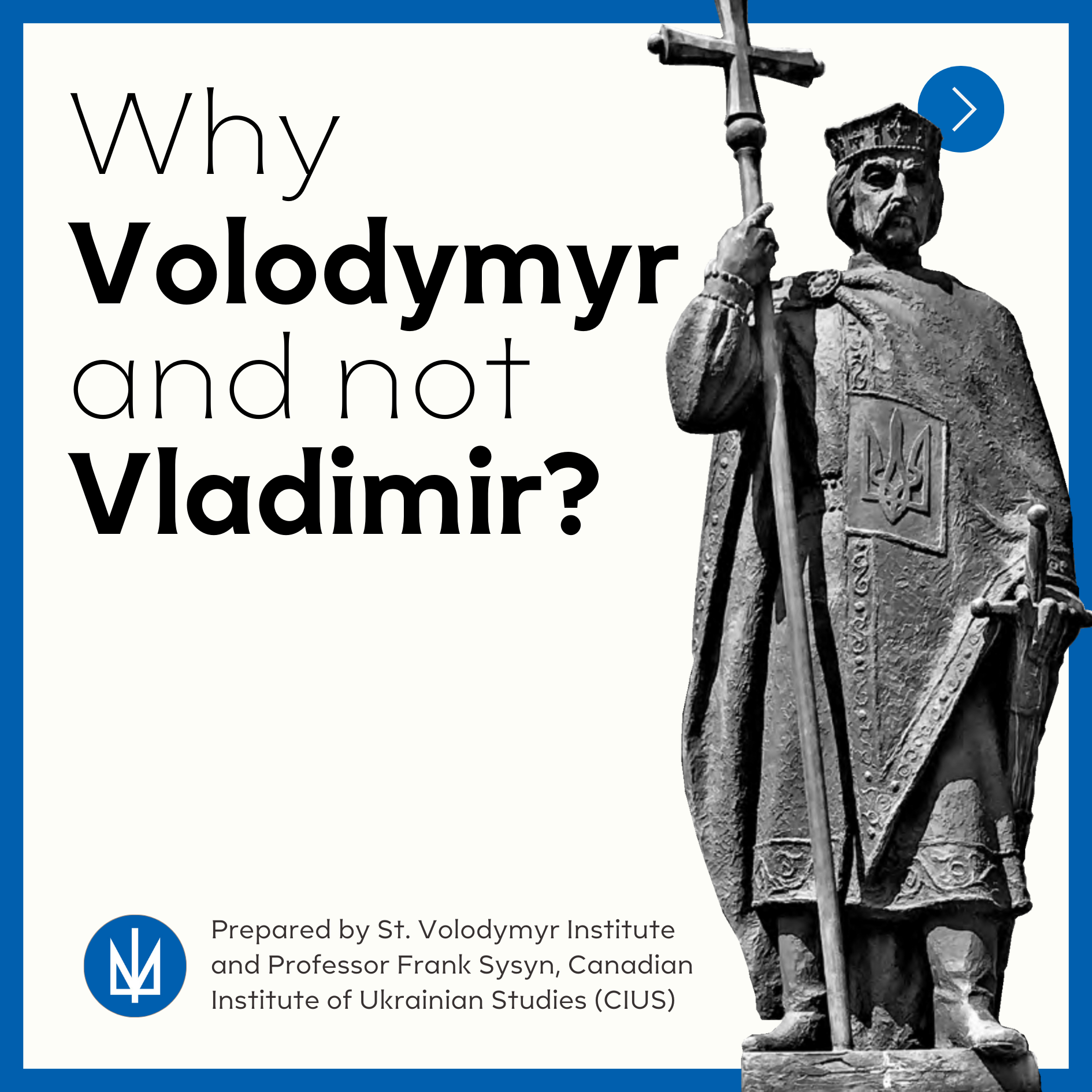
Why Volodymyr and not Vladimir?
Prepared by St. Volodymyr Institute (SVI) and Professor Frank Sysyn, Canadian Institute of Ukrainian Studies (CIUS)
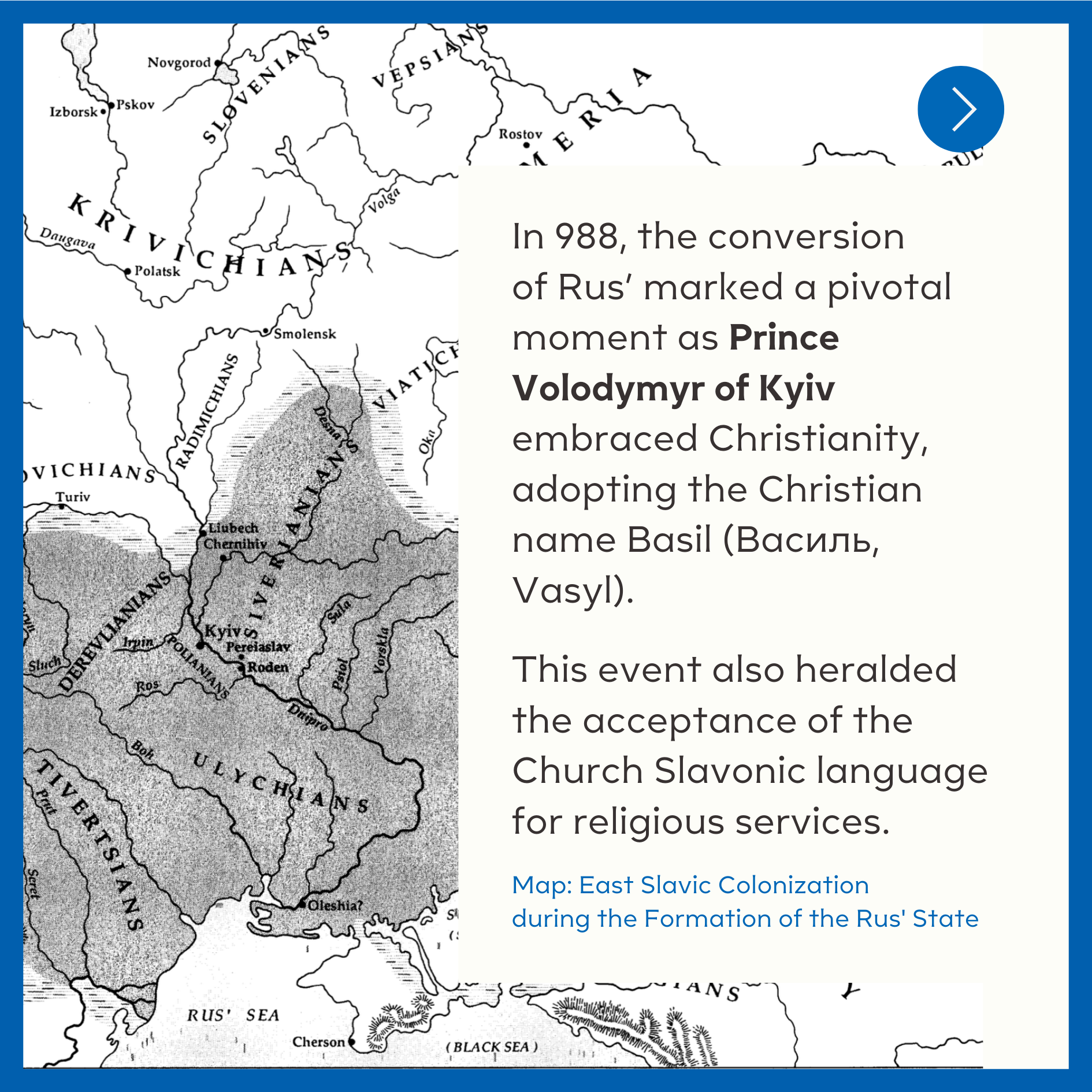


In 988, the conversion of Rus’ marked a pivotal moment as Prince Volodymyr of Kyiv embraced Christianity, adopting the Christian name Basil (Василь, Vasyl).
This event also heralded the acceptance of the Church Slavonic language for religious services.
The linguistic landscape of the region witnessed a transition; the Church Slavonic language, originating from the South Slavs, underwent adaptation in the East Slavic lands.
Forms of the Slavonic name Vladimir varied across the region. The Rus’ lands spoke East Slavic, and in their early chronicles, forms such as 'Volodimer' were used.
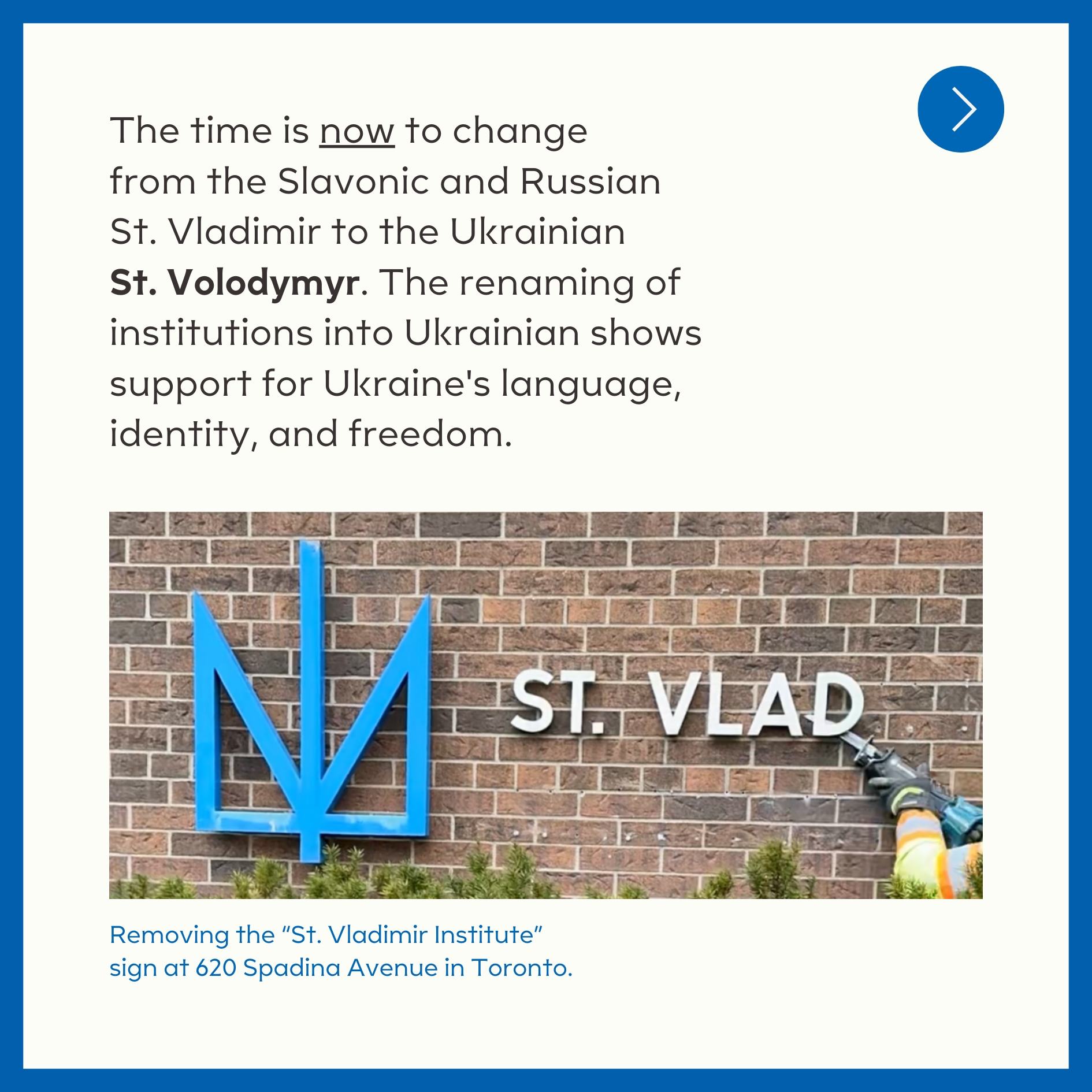
Modern Ukrainian uses the East Slavic derived Volodymyr, while Russian uses the Slavonic derived Vladimir.
The first Ukrainian-language liturgy was said in Kyiv in 1919 and the Ukrainian Orthodox Church of Canada adopted Ukrainian in its services from its formation in 1918. The Ukrainian Greek Catholic Church (UGCC) adopted the Ukrainian language in its services a few decades later.
At present we see the supporters of the autocephalous Orthodox Church of Ukraine overwhelmingly adopting Ukrainian while the church still associated with Moscow keeps Slavonic.
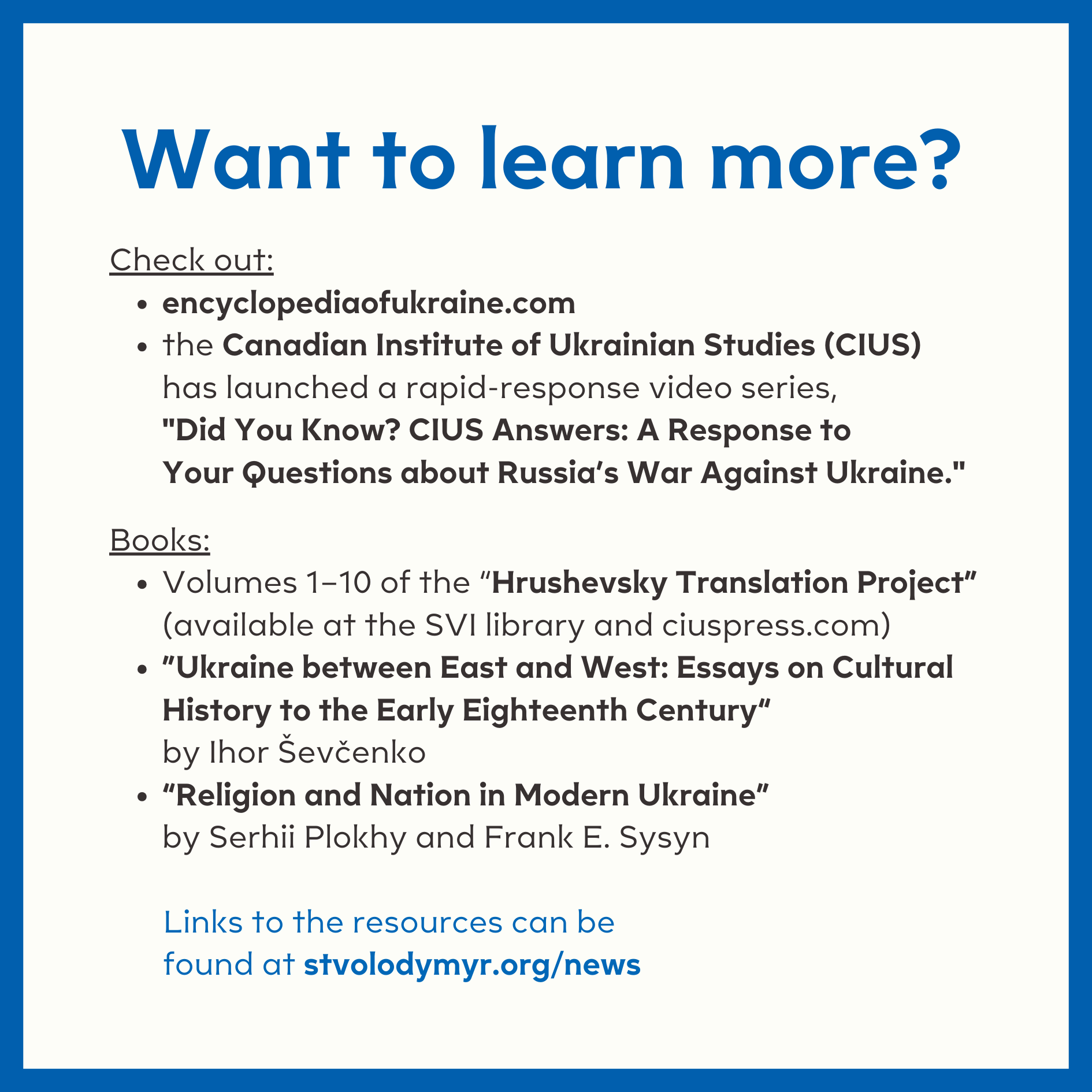
Want to learn more?
Check out:
the Canadian Institute of Ukrainian Studies (CIUS) has launched a rapid-response video series, "Did You Know? CIUS Answers: A Response to Your Questions about Russia’s War Against Ukraine."
Books:
Volumes 1–10 of the “Hrushevsky Translation Project” (available at the SVI library and ciuspress.com)
“Religion and Nation in Modern Ukraine” by Serhii Plokhy and Frank E. Sysyn
